

A backyard birthday party can feel special with a few friends, something good to eat, and enough space to play. Start with what your home already offers: a patch of lawn, a shaded table, or a patio that becomes a drawing station. This guide builds a manageable celebration around those things. The sample plan suits a small group of roughly six to ten children, with attending adults counted separately for seating and food. Adapt the activities to the children you are inviting.
Plan the backyard birthday around your space
Before choosing decorations, walk through the yard at the time you expect to host. Notice where people can sit comfortably, how guests will reach the bathroom, and where food can stay close to the kitchen. Decide which areas will be available and which will be closed. A smaller usable space is a helpful planning boundary. It tells you how many people to invite and which games will actually fit.
Choose a clear beginning and ending
A ninety-minute gathering is one possible starting point for this plan, rather than a rule for every age or family. Allow time for arrivals, two activities, food, and cake. If you prefer a meal and a longer afternoon, extend the schedule deliberately. Avoid booking every minute: a game that everyone enjoys can continue while another becomes an optional backup.
Make the invitation useful
Include the start and finish times, whether adults should stay, and whether siblings are included. Explain whether you are serving lunch or just snacks and cake. Ask guests to share food requirements privately when they reply. Add your weather plan, such as a smaller indoor version or a decision sent the morning before. These details help families arrive prepared without a long exchange of messages.
Give the yard three simple jobs
Create an arrival area, an activity area, and a place to eat. The arrival area might be a picnic blanket with paper and washable markers. Keep running games away from the food table and leave a clear route to the house. Put chairs where accompanying adults can supervise comfortably. Before guests arrive, check the space for tools, pet waste, loose cables, and anything that needs moving or securing.
Choose one decorating moment
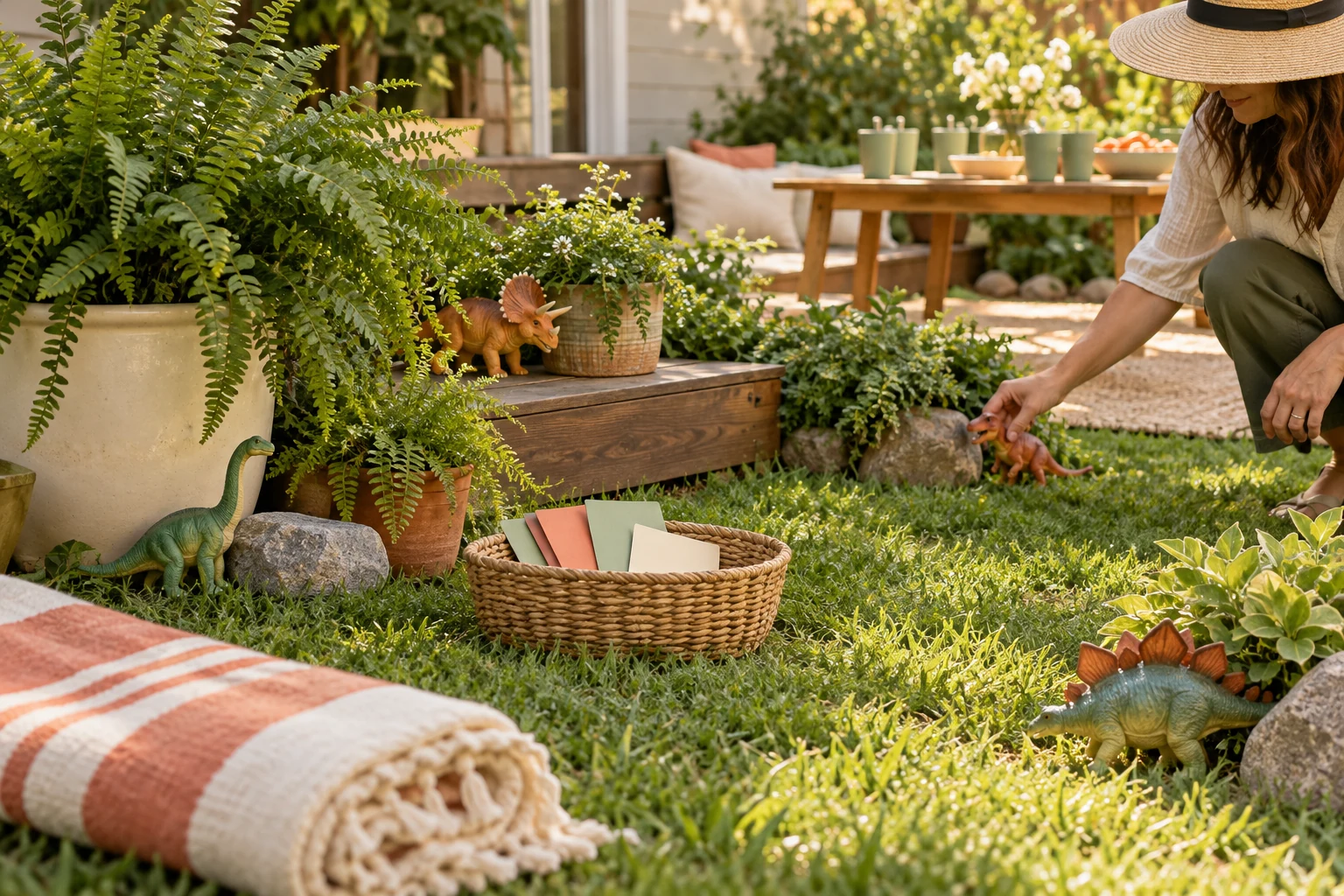
Pick two colors and repeat them on the table, a paper banner, and the birthday child’s chair. A favorite toy or a hand-drawn sign can introduce the theme. Use serving pieces you own and borrow extra chairs before buying more. One cheerful table gives you a place for the cake and photographs without requiring decorations across the whole garden.
Choose two activities with an easy backup
Prepare activities that use familiar materials and can be explained in a few sentences. Put each game’s supplies in its own basket. A host can then bring out the next activity without leaving everyone waiting while equipment is collected.
Try a picture scavenger hunt
Draw six objects on a sheet: a leaf, a flower, a chair, something round, something blue, and something with stripes. Children can point to their discoveries or draw them instead of collecting anything. Keep the search inside the agreed play area. Finish together by asking each child which discovery surprised them.
Adjust for different ages
Pair younger children with an adult and use three obvious pictures. Older children can invent clues for one another. For guests who prefer a seated activity, arrange a tray of objects and let them match the same picture sheet at the table.
Make a birthday mural
Secure a large sheet of paper to a table and invite everyone to add a garden, imaginary town, or birthday message. Leave the finished picture somewhere visible for cake time. Keep ordinary drawing paper nearby as a backup for anyone who wants their own project. The mural can become the birthday child’s keepsake.
Serve a menu you can manage
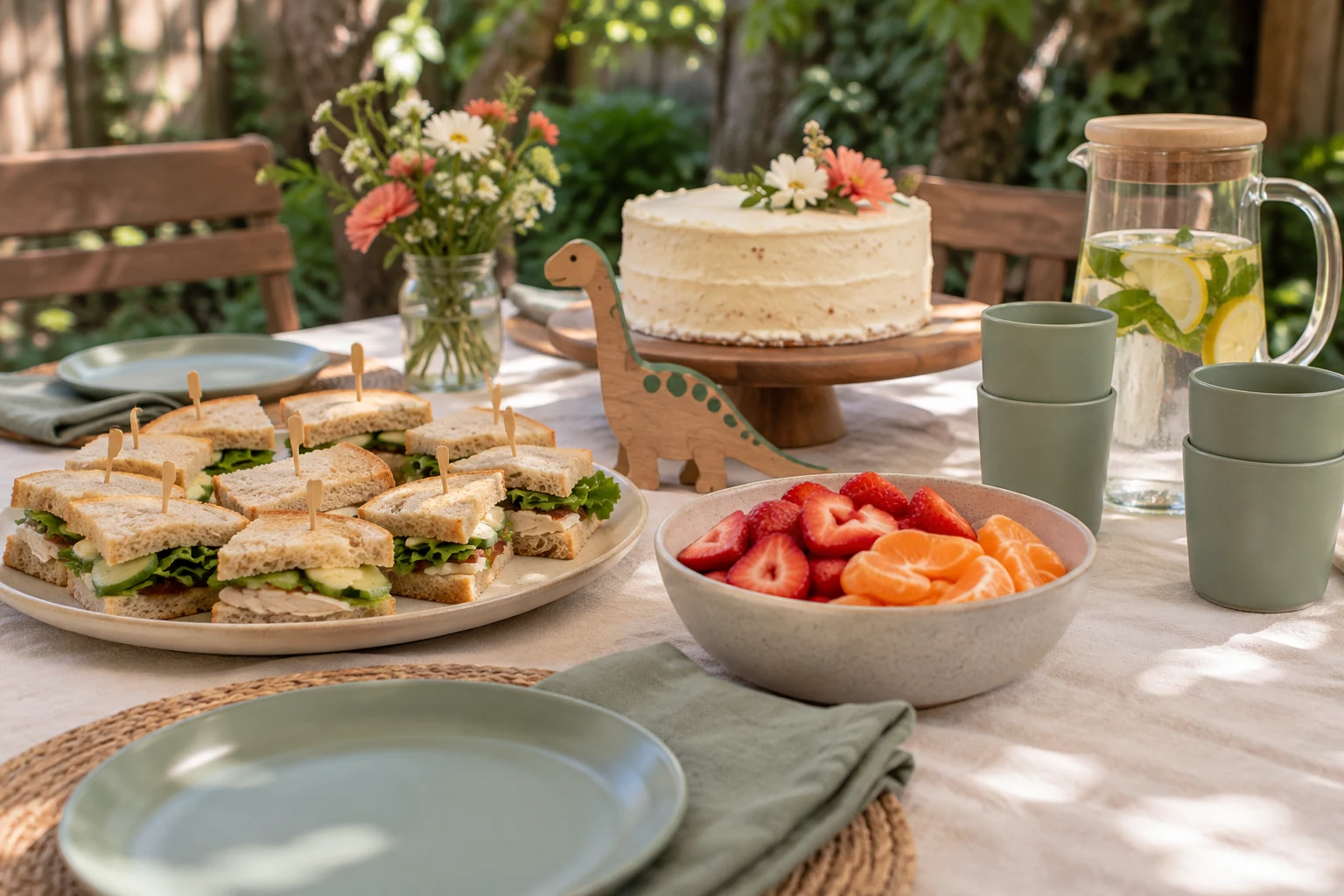
Choose one main food if the party overlaps a meal, one fruit or vegetable option prepared appropriately for the guests, water, and cake. Sandwiches, a familiar pasta dish, or a preordered meal can each work. Write quantities against your confirmed guest list rather than buying an extra platter of everything. The EPA’s food waste guidance recommends checking existing supplies and planning shopping quantities.
Keep ingredient packaging available and discuss individual requirements with the relevant parent. The FDA’s label-reading guidance explains why the full ingredients list matters. A handwritten food label helps describe a dish, but should not be treated as a guarantee that it meets someone’s allergy needs.
Bring perishable dishes out close to serving. The FDA advises discarding perishables left at room temperature beyond two hours, or one hour above 90°F (32°C), unless held safely hot or cold. Browse food and treats for more menu inspiration.
Use a flexible ninety-minute schedule
- First fifteen minutes: Welcome families, show them the bathroom, and invite children to draw while friends arrive.
- Next twenty minutes: Explain the scavenger hunt and explore together, leaving time to share discoveries.
- Next twenty minutes: Serve the food and give everyone a comfortable pause.
- Next twenty minutes: Bring out the mural, or continue whichever activity the group enjoys.
- Final fifteen minutes: Gather for cake, thank guests, and help everyone collect belongings.
Prepare in small, useful stages
A week before, confirm your guest list, food plan, and indoor alternative. A day before, assemble the game baskets, set aside serving pieces, and check your shopping list. On the day, clear the play area, prepare the table, and leave food in suitable storage until needed. These are planning suggestions; your actual preparation time depends on the menu and space.
Write down three jobs another adult could take: welcoming guests, helping with an activity, and serving cake. Specific requests are easier to act on than a general offer to help. Keep a small tray ready for cups and used plates so tidying can happen gradually without interrupting the celebration.
Decide where the budget matters most
Choose your spending limit before adding extras. List food, the birthday treat, activities, decorations, and any borrowed or hired equipment separately. Price the essentials first, then decide what remains for optional touches. A decorated chair or favorite cake may matter more to your child than matching favors. Ask them to choose one detail they are especially excited about.
After the party, keep a short note of the food quantities, activities, and supplies you used. Save the picture hunt with your reusable decorations. Those small records give the next celebration a useful starting point and help you avoid buying materials that are already sitting in a cupboard.
Keep a smaller version ready
If weather changes the plan, bring the picture hunt and mural indoors and use a single table for food. If dessert is the main event, borrow the serving approach from our ice-cream party guide. Choose a checklist from free printables, then explore more party ideas when you are ready to plan the next gathering.