
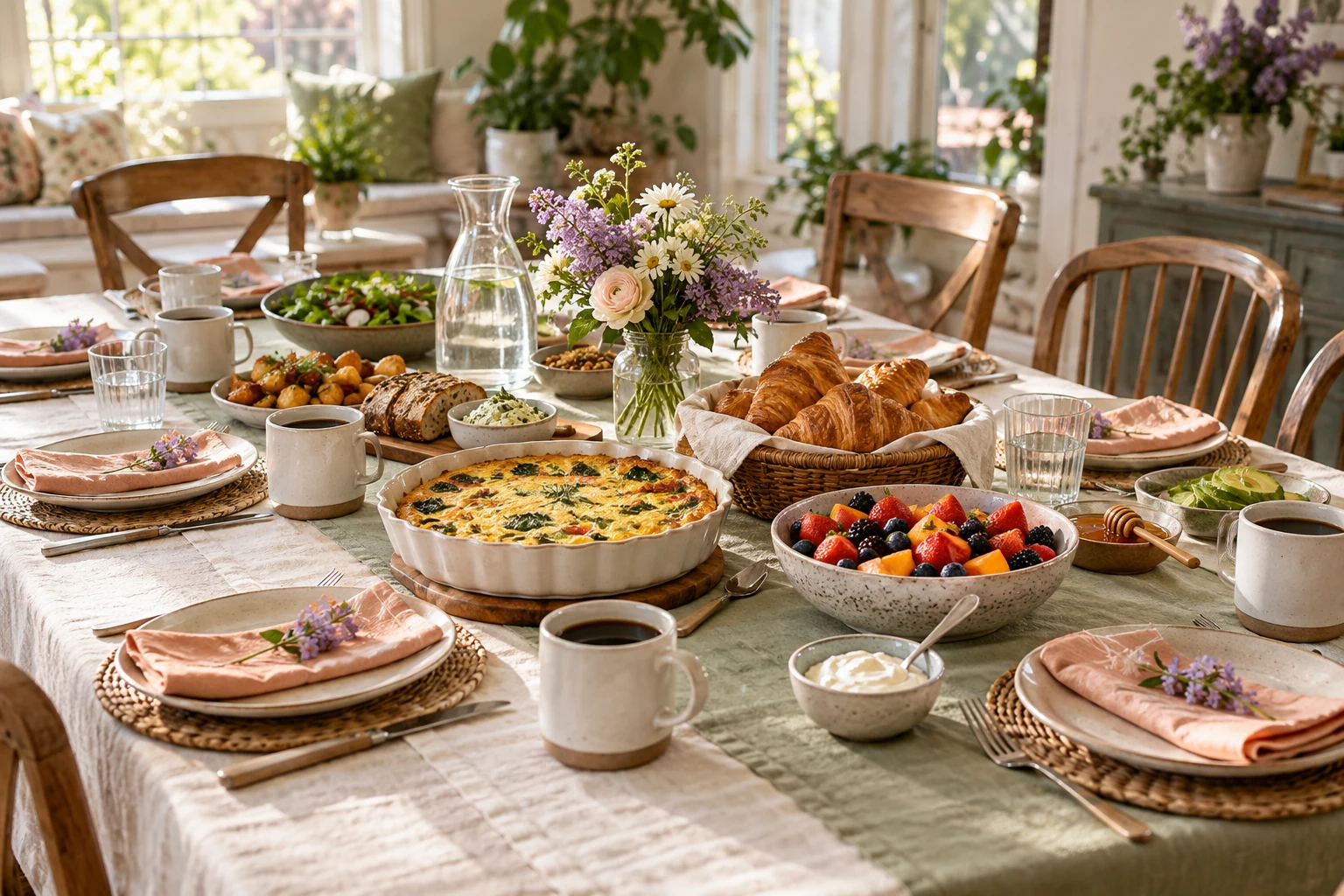
A bring one thing brunch starts with a simple agreement: everyone contributes one useful part of the meal, and the host gives it a little structure. It works for a small gathering of friends, a weekend catch-up, or a relaxed celebration for a mom in your circle. The aim is a table that feels generous without asking one person to cook everything. This guide uses six adults as an example, with ideas for adapting the plan when children are included.
Decide what kind of morning you want
Choose a date, a clear arrival time, and a comfortable finishing time. Around two hours is a reasonable planning starting point for a meal and conversation, depending on your group. Tell guests whether children are included and whether they can arrive a little late. Those practical details matter more than choosing a theme. A brunch can be as simple as coffee, a shared main dish, fruit, and bread.
Send an invitation with a clear next step
Try wording along these lines: come for brunch on Saturday from ten until noon; we will each bring one part of the meal, and I will organize the list. Ask people to reply with dietary requirements and the category they would enjoy contributing. Say that store-bought food is welcome. A guest who cannot bring something should still feel invited.
Give every contribution a specific job
Start with the whole menu and divide it into categories. For six adults, the host could provide a main dish, water, and tableware. Other guests might bring fruit, bread, a sweet item, coffee supplies, and juice. Adjust the assignments around what you already own. If your coffee is covered, that person could bring an agreed side or simply help with setup.
Describe the amount as well as the dish
Ask for one contribution to share among six, rather than a complete meal for six from every guest. Tell people what else is coming. A small fruit platter is easier to judge when the contributor knows there will also be bread and a main dish. Keep the list in one shared message and update it when someone claims an item.
Leave room for different budgets
Offer a few choices with different costs and preparation needs. Someone may enjoy baking; another may prefer bringing a loaf of bread. Avoid treating the size of a contribution as a measure of effort. If friends suggest splitting costs instead, agree on the amount before anyone shops so everyone can decide comfortably.
Choose a main dish that fits your kitchen
Pick something you can serve without cooking individual orders once guests arrive. A baked dish, a prepared savory tart, or a bagel spread can suit different groups. If you want a recipe to follow, the USDA’s broccoli-cheddar frittata lists ingredients and instructions for six servings. Read any recipe before choosing it and check that its ingredients work for your guests.
Keep the rest of the menu complementary. A substantial main, bread, fruit, and one sweet item already give people several choices. You can explore more combinations in food and treats. If children are coming, agree on a familiar option with their parents instead of creating an entirely separate menu on guesswork.
Agree on transport and serving details
Ask contributors whether their dish needs refrigeration, reheating, or assembly. Find out before brunch morning if three people expect to use your oven. Request a serving utensil and a written ingredients list, and keep packaging for purchased items. Discuss allergy requirements directly with the relevant guest; a casual shared meal should not be presented as free from cross-contact.
Set perishable dishes out close to the meal. The FDA’s buffet guidance calls for hot holding at 140°F (60°C) or above and cold holding at 40°F (4°C) or below. Discard perishables left at room temperature beyond two hours, or one hour above 90°F (32°C).
Set the table for conversation
Arrange seats so everyone can see one another. Put food on a sideboard if the dining table is small, and create a separate place for coffee. Leave enough room to set down a plate and cup without moving decorations. A folded napkin, a sprig of greenery, or a small vase can provide all the table styling you need.

Offer a gentle way to start talking
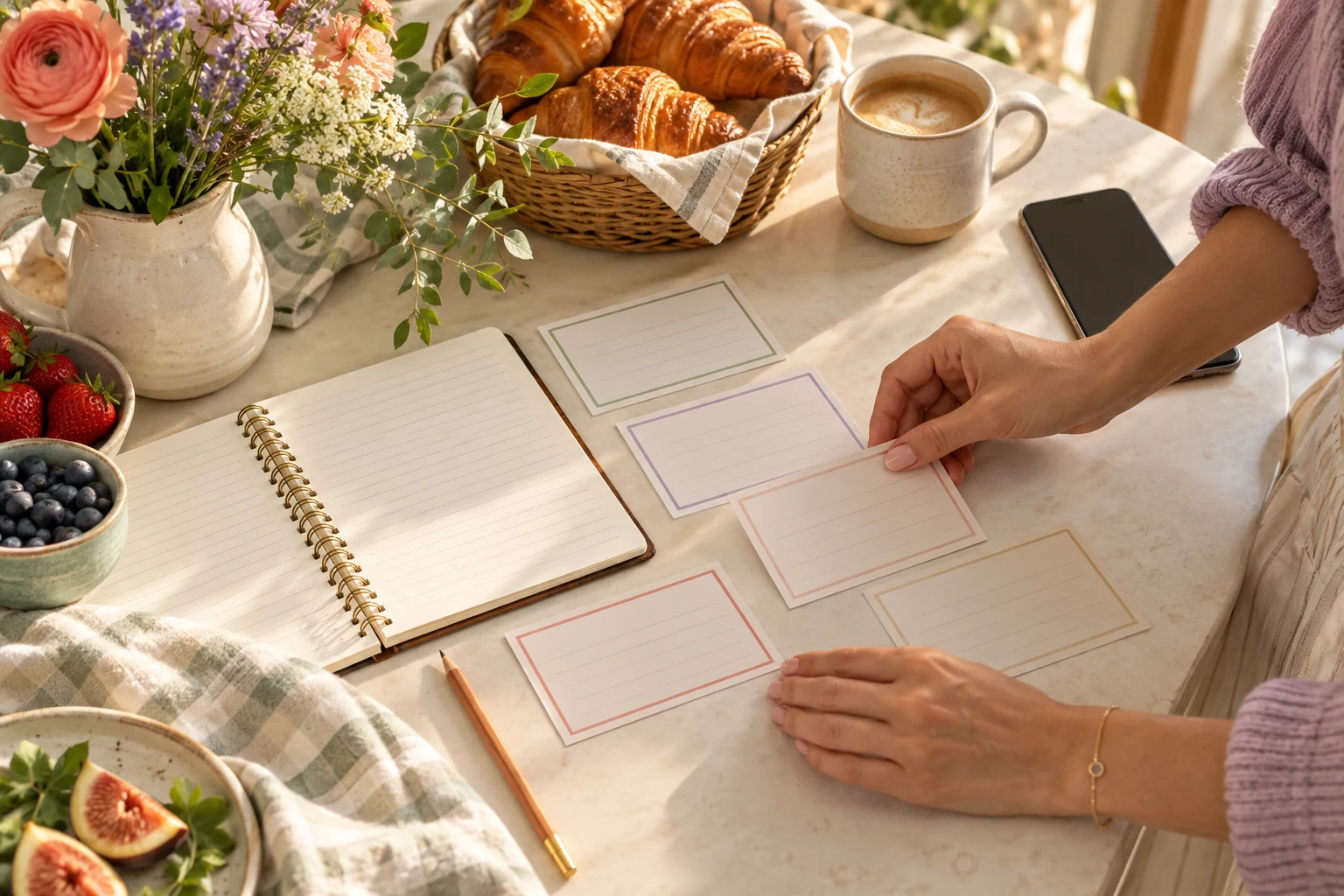
A few prompt cards can help when guests do not all know one another. Ask about a meal they would happily eat every week, something they have enjoyed recently, or a place they would like to visit. Make answering optional and let the conversation move on. A brunch does not need introductions that feel like a presentation.
Keep the morning easy to follow
Welcome people with a drink and show them where their contribution belongs. Use the first fifteen or twenty minutes to settle food and greet arrivals, then invite everyone to eat. Leave the middle of the gathering open for conversation. Near the agreed ending time, offer another coffee and begin arranging suitable leftovers and returning serving dishes.
If children are included, put drawing materials or another familiar activity nearby and agree how adults will share supervision. Keep the arrangement flexible so nobody spends the entire gathering away from the table. For an adults-only morning, make that clear in the original invitation. Each version can work when guests know what to expect.
Prepare a little and share the remaining jobs
A few days before, confirm attendance and contributions. The evening before, clear the table, arrange chairs, and gather plates, cups, and serving utensils. On the morning itself, prepare your contribution and make space for arriving dishes. Ask one friend to help with coffee and another to gather used plates. Specific jobs let people help without repeatedly asking what needs doing.
Plan for leftovers before the meal begins. The EPA recommends buying appropriate quantities and storing leftovers in labeled containers. Keep food safety time limits in mind, and only share food that has been handled appropriately. Ask guests to take their serving dishes home so you are not organizing a second round of collections.
Leave with a plan you would repeat
Save the final contribution list with your guest count. It becomes a reusable starting point, especially when the same friends want to gather again.
Afterward, note what the group enjoyed and what you would simplify. Rotate the host if friends are interested, or meet less often with the same manageable format. Browse Mom Time for more ways to gather, use free printables to organize the next menu, or try an afternoon ice-cream party when brunch does not fit everyone’s calendar.